The cost of living in Laos is generally affordable by regional standards, but your monthly budget can range widely by city and lifestyle: a single person will often spend about €700 to 1,300, couples around €1,200 to 1,900, and families roughly €2,000 to 3,500 or more.
For expatriates, the difference usually comes down to where you live, and how much you rely on imported goods, private services, and international-standard amenities.
Expats are most commonly based in Vientiane, the national capital and main business centre. Luang Prabang attracts people working in tourism, hospitality, and development, while smaller cities such as Pakse and Savannakhet provide a more local and generally less expensive experience.
Understanding these differences matters if you are planning a realistic relocation budget. It can impact the main costs significantly, including –
- Accommodation,
- Food,
- Transport,
- Healthcare,
- Education,
- Internet & mobile services.
Laos offers a slower pace of life surrounded by mountains, rivers, historic temples, and close-knit communities, and although the country is developing rapidly, it remains quieter and less commercialised than many other destinations in Southeast Asia. This guide breaks down the cost of living in Laos across housing, daily expenses, healthcare, schooling, and connectivity, with practical comparisons and advice to help you decide what kind of life you can afford and prepare for the realities of settling in.
How much money will you need each month for the cost of living?
Your budget in Laos will depend on your location and expectations. Vientiane is usually the most expensive city, especially when renting modern accommodation in areas popular with diplomats and international professionals. Luang Prabang can also be costly because of its importance as a tourist destination.
The national currency is the Lao kip. US dollars and Thai baht may occasionally be accepted for larger payments, but the kip is used for most everyday transactions. Currency values can fluctuate, so international residents should review exchange rates regularly.
A single person can expect to spend approximately €700 to 1,300 per month, including rent. A couple sharing accommodation may need between €1,200 and 1,900, while a family could require €2,000 to 3,500 or more. International school fees and comprehensive healthcare coverage can push a family’s budget significantly higher.
Some of the most appealing aspects of living in Laos include:
- A relaxed and unhurried way of life.
- Affordable local food and services.
- Beautiful natural surroundings.
- A welcoming and community-oriented culture.
- Easy access to Thailand, Vietnam, Cambodia, and China.
Relocating to Laos is an opportunity to experience a lifestyle that feels very different from life in a large Western city.
A closer look at your living expenses
Renting a home in Vientiane or beyond
Finding the right accommodation is an important part of settling into life in Laos. Vientiane offers everything from simple apartments and traditional houses to modern serviced residences designed for international professionals and expat living.
A one-bedroom apartment in Vientiane generally costs between €300 and 600 per month. Newer furnished apartments in central or expat-oriented neighbourhoods can cost between €550 and 900, particularly if they include security, cleaning, parking, or a swimming pool.
A three-bedroom apartment or house usually costs between €600 and 1,200 per month. Large properties with gardens, security, and international-standard facilities may cost more.
Accommodation in Pakse, Savannakhet, and other regional cities is generally cheaper. Luang Prabang can be less predictable, as demand from tourism and limited availability may increase prices in central areas.
Basic utilities, including electricity and water, normally cost between €50 and 100 per month. Frequent use of air conditioning can raise electricity bills considerably during the hottest part of the year.
Rental agreements are sometimes negotiated in US dollars or Thai baht. Landlords may request several months of rent in advance, so it is important to understand all payment conditions before signing a contract.
Enjoying local flavours on any budget
Eating local food is one of the easiest ways to keep living costs manageable in Laos. Traditional markets sell fresh vegetables, herbs, rice, meat, fish, and tropical fruit at accessible prices.
One person may spend between €140 and 280 per month on groceries. Choosing imported dairy products, wine, specialist ingredients, or international brands can increase this amount considerably.
A meal from a market stall or simple local restaurant generally costs between €1.50 and 4. Popular dishes include laap, sticky rice, papaya salad, noodle soup, and grilled meat or fish.
A meal in a mid-range restaurant normally costs between €5 and 12 per person. A three-course dinner for two may cost approximately €15 to 30, while international restaurants and hotel dining will be more expensive. A coffee in a modern café usually costs between €1.50 and 3.
What makes eating in Laos particularly enjoyable:
- Fresh herbs and locally grown ingredients
- Affordable markets and neighbourhood restaurants
- A distinctive food culture influenced by neighbouring countries
- Popular local products such as Lao coffee and Beerlao
- Relaxed riverside dining in Vientiane and Luang Prabang
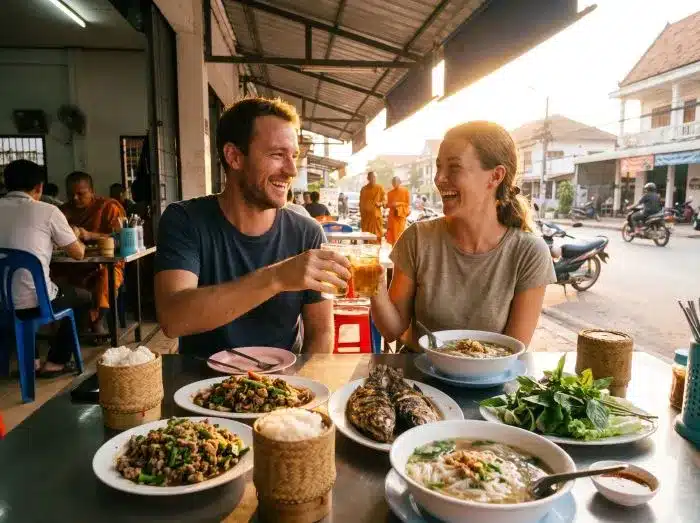
Eating locally is not only more affordable. It also provides a direct connection to Lao culture and everyday life.
Finding your way around the country
Public transport in Laos is limited compared with larger Asian cities. Vientiane has local buses, but routes and schedules may not always be convenient for international residents.
Tuk-tuks are widely used for short journeys. A typical ride may cost between €2 and 6, depending on the distance and your ability to agree on the price. Taxis and app-based transport services are increasingly available in Vientiane and other urban areas.
Many residents use motorbikes or scooters for daily transportation. Before driving, you should check local licensing requirements, road conditions, and whether your insurance provides suitable coverage.
A monthly transportation budget of €30 to 100 may be sufficient if you rely on buses, tuk-tuks, or a motorbike. Regular taxi use or private car ownership will increase your costs.
Petrol currently costs approximately €1.20 to 1.50 per litre, depending on the fuel type and province.
The Laos-China Railway has transformed travel between Vientiane, Vang Vieng, Luang Prabang, and northern Laos. Long-distance buses and minivans connect other destinations, while domestic flights are useful when travelling between distant regions.
Preparing for your healthcare needs
Healthcare requires careful planning when moving to Laos. Medical facilities are available in Vientiane, but the country’s healthcare infrastructure remains limited, particularly outside the capital. The government plans to introduce universal healthcare in Laos, although access and quality remain uneven at present.
Private clinics can provide consultations, routine treatment, and basic emergency care. A private medical appointment in Vientiane may cost approximately €20 to 40.
For serious conditions, complex surgery, or specialist treatment, expats are often transferred to Thailand. Hospitals in Udon Thani and Bangkok are commonly used because they offer more advanced facilities. Medical evacuation to Thailand or another country can cost thousands of euros without suitable insurance.
International health insurance can be essential for expats to ensure they have full health cover. Learn more in our international health insurance in Laos guide.
A suitable policy should ideally include:
- Private treatment in Laos
- Access to hospitals in Thailand
- Emergency medical evacuation
- Repatriation assistance
- Outpatient and specialist treatment
- Direct billing where available
As part of your relocation, having suitable health coverage is essential. At Global Health, we provide international health insurance solutions that support you in Laos and worldwide, giving you peace of mind wherever you are.
Discover today our plans in just a few clicks
Understanding education expenses
Families moving to Laos will need to examine their education options carefully. Public schools generally teach in Lao and may not be suitable for children who do not speak the language.
Most international and bilingual schools are located in Vientiane. They may follow American, British, French, or International Baccalaureate programmes.
Annual tuition fees at international schools vary significantly. More affordable bilingual schools may charge between €4,000 and 9,000 per year. Fees at premium institutions can range from approximately €10,000 to more than €23,000 per year.
Vientiane International School is one of the country’s leading international institutions. Its fees are considerably higher than those of many local private schools, particularly for secondary education. Families may also need to pay application, enrolment, capital, transport, meal, and extracurricular activity fees.
Laos has several higher education institutions, including the National University of Laos. Courses are generally taught in Lao, although some international programmes may be available.
International students should contact universities directly for current tuition information. Monthly living costs for students may range from €400 to 800, depending on accommodation and lifestyle.
Internet access and mobile services
Mobile data in Laos is inexpensive and widely available in urban areas. Prepaid packages can cost as little as a few euros per month, while larger plans with additional data generally range from €5 to 15.
Home broadband usually costs between €10 and 25 per month. Availability and connection speeds depend on the neighbourhood and provider.
Internet service is generally adequate in central Vientiane and other major cities. Connections can be slower or less reliable in rural and mountainous areas.
Remote workers should verify the quality of the connection before signing a rental agreement. A second SIM card or mobile data package can provide a useful backup during interruptions.
Comparing living costs in Laos and the United States
| Cost category | Laos | United Kingdom |
| Rent for a one-bedroom apartment | €250 – 900 ₭6.5 – 23.3 million | €820 – 3,160 £700 – 2,700 |
| Groceries per month | €140 – 280 ₭3.6 – 7.2 million | €235 – 410 £200 – 350 |
| Transportation per month | €30 – 100 ₭775,000 – 2.6 million | €95 – 195 £80 – 165 |
Exchange rates used: €1 ≈ ₭25,850 and £1 ≈ €1.17. Exchange rates fluctuate, so these figures should be treated as estimates.
Is Laos cheaper than the rest of Southeast Asia?
Laos remains affordable compared with most Western countries. Local food, public transport, mobile data, and personal services generally cost considerably less than in Europe or the United States.
Compared with neighbouring countries, the picture is more complex. Basic local living costs can be similar to or lower than those in Thailand, Vietnam, and Cambodia. However, Laos has a smaller market and fewer international suppliers, which can make imported products more expensive.
Vientiane also has a limited supply of modern international-standard accommodation. As a result, premium apartments are not always as inexpensive as newcomers expect.
Healthcare and education are two of the most important differences. Families requiring international schools and comprehensive medical coverage may find that their overall budget is much higher than local prices initially suggest.
Living like a local can make Laos highly affordable. Maintaining a fully Western lifestyle will require a more generous budget.
Getting ready for your move to Laos
Laos attracts diplomats, development professionals, teachers, entrepreneurs, hospitality workers, retirees, and people seeking a quieter lifestyle in Southeast Asia.
The country offers beautiful landscapes, a strong sense of tradition, and an unhurried atmosphere. However, moving there also requires flexibility. Administrative processes may take time, English is not spoken everywhere, and access to specialised services is more limited than in major regional centres such as Bangkok.
Learning some basic Lao can make everyday interactions easier and help you build stronger connections with the local community. French and English are used in some professional, educational, and tourism environments, but Lao remains essential in many daily situations.
Currency fluctuations should also be considered when planning a long-term budget. Keeping part of your income or savings in a more stable international currency may help you manage changes in the value of the Lao kip.
Moving to Laos is about more than finding an inexpensive place to live. It is an opportunity to adopt a slower rhythm, experience a distinctive culture, and explore one of Southeast Asia’s most fascinating countries.
Other guides for Laos
-

 Georgia
-
 Paraguay
-
 Seychelles