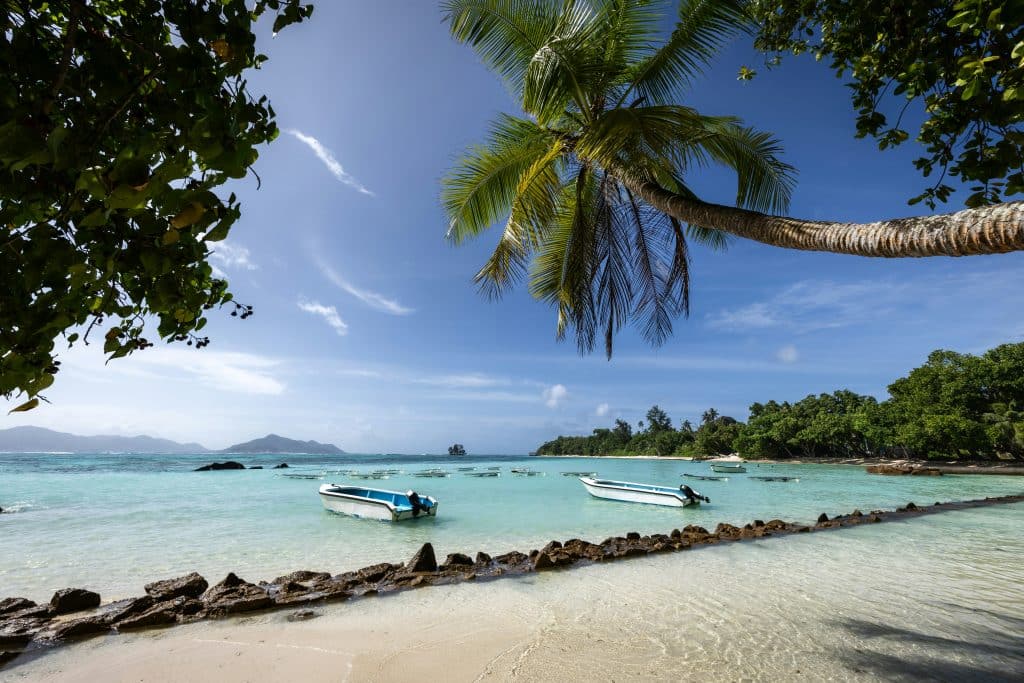
Laos is one of Southeast Asia’s quieter choices for expats. It does not have the enormous foreign communities of Thailand or the fast-moving cities of Vietnam, but that is precisely part of its quiet appeal. Life tends to move more slowly, the landscape is spectacular and the cost of many everyday essentials remains relatively low.
For Europeans, North Americans and other English-speaking expats, Vientiane is usually the easiest place to settle. The capital has international schools, private medical facilities, restaurants, supermarkets and a growing selection of modern apartments. Luang Prabang offers a smaller, more atmospheric alternative, while Pakse appeals to people who prefer southern Laos and easy access to the Bolaven Plateau and Mekong region.
At the same time, living in Laos requires flexibility. Infrastructure is still developing, bureaucracy can be difficult to navigate and healthcare becomes much more limited once you leave Vientiane. Laos has also experienced considerable inflation and currency depreciation in recent years. Economic conditions improved during 2025 and early 2026, but the World Bank describes this stability as fragile.
For expats who prepare properly, however, Laos can offer an unusually relaxed version of life in Southeast Asia.
The pros and cons of living in Laos
Pros
- Daily life can be relatively affordable, particularly if you eat local food and avoid imported products. A meal at an inexpensive restaurant in Vientiane currently averages around LAK 55,000 (2,25 €), while local transport can cost around LAK 10,000 (0,40 €) per journey.
- The pace of life is noticeably slower than in many neighbouring Asian capitals. Even Vientiane feels relatively small and manageable compared with Bangkok, Hanoi or Ho Chi Minh City.
- Nature is one of Laos’s greatest attractions. Mountains, waterfalls, the Mekong River and extensive rural landscapes make the country particularly appealing to expats interested in hiking, cycling and outdoor life.
- Regional travel has become easier. Improved rail connections have made travelling between Vientiane, Vang Vieng, Luang Prabang and northern Laos considerably more convenient.
Cons
- Healthcare is a significant consideration. Medical facilities outside Vientiane are limited, and serious illnesses or injuries may require evacuation to Thailand.
- The language barrier can be considerable. English is spoken in international businesses, hotels and some private clinics, but Lao becomes increasingly important outside expat circles and tourist areas.
- Administrative procedures can be complicated. Long-term visas, work permits and stay permits often involve an employer, business or other local sponsor.
- Imported products can be surprisingly expensive. Laos is landlocked and relies heavily on imports, so an international lifestyle can cost considerably more than a predominantly local one.
Administrative procedures when moving to Laos
For a short initial visit, many foreign nationals can apply for Laos’s official eVisa. The eVisa is currently available for tourism, permits a stay of 30 days and is valid for a single entry. The approval letter itself is valid for up to 60 days. Applicants need a passport with at least six months’ validity and must enter through an approved port of entry.
However, a tourist visa is not a solution for somebody actually relocating to Laos.
The country operates several visa categories, including:
- Tourist visa
- Short-term visa
- Long-term visa
- Expert visa
- Student visa
- Business visa for foreign investors
- Technical visa for foreign employees

Foreigners employed in Laos generally need the appropriate business or technical visa together with the necessary work and stay permissions. Investors, employees, experts and family members may fall under different categories depending on their circumstances.
For employees, much of the process is normally handled in cooperation with the employer. Business owners and investors may deal with Laos’s investment and immigration authorities through the relevant procedures.
Typical documents can include:
- Valid passport
- Passport photographs
- Employment contract or sponsorship documents
- Company documentation
- Relevant professional qualifications
- Medical documentation where required
- Work permit
- Stay permit
- Multiple-entry visa where applicable
The exact requirements depend heavily on the reason for residence. Expats should therefore confirm the current procedure with the Lao authorities, their employer or a reputable immigration specialist rather than relying on the rules applicable to tourists.
Getting your work and stay permits
For expats taking local employment, obtaining permission to work is one of the most important administrative steps.
A visa alone does not automatically provide permission to work. Foreign employees may require a technical visa, work permit and stay permit, while investors use different business visa categories. Laos officially recognises separate visa categories for foreign investors, experts and technical foreign employees.
Employers will generally play an important role in arranging the correct documentation. This makes it sensible to clarify immigration support before accepting a position.
Remote workers should also be cautious about assuming that a tourist visa gives them an automatic right to live and work indefinitely from Laos. Anyone planning to base themselves in the country long term should obtain advice appropriate to their employment and tax situation.
Finding accommodation in Laos
Most expats rent, particularly when they first arrive. Renting gives newcomers time to understand traffic, neighbourhoods, schools and healthcare before making longer-term commitments.
Popular places to live include:
Vientiane
The capital is the obvious choice for most professionals and families. It has the widest range of international schools, hospitals, supermarkets, restaurants and expat-oriented accommodation.
Sisattanak is particularly popular with foreign residents because of its restaurants, cafés, embassies and international facilities. Sikhottabong and areas around the Mekong can also offer attractive houses and apartments.
Luang Prabang
Luang Prabang is considerably smaller and more tourism-oriented. Its UNESCO-listed historic centre, surrounding mountains and slower lifestyle make it attractive to people working in tourism, hospitality, NGOs and remote professions.
The trade-off is a much smaller selection of schools, specialist healthcare and professional services.
Vang Vieng
Once known primarily as a backpacker destination, Vang Vieng has developed considerably. Its dramatic limestone scenery and improved transport connections have made it more accessible, although it remains better suited to tourism professionals and remote workers than families needing extensive international services.
Pakse
Pakse is the main urban centre in southern Laos and a base for exploring Champasak, the Bolaven Plateau and the 4,000 Islands region. Living costs can be lower than in Vientiane, but international facilities are also much more limited.
Approximate monthly rents in Vientiane:
| Property type | City centre | Outside centre |
| 1-bedroom apartment | LAK 14.2 million (550 €) | LAK 9.2 million (350 €) |
| 3-bedroom apartment | LAK 24.1 million (940 €) | LAK 15.3 million (600 €) |
These are averages rather than fixed market prices, and there is a wide range. A one-bedroom apartment in central Vientiane, for example, is currently reported at roughly LAK 8 million (310 €) to LAK 32 million (1250 €) depending on standard and location.
The cost of living in Laos
Laos can still be inexpensive by European or North American standards, but the picture is more complicated than the country’s reputation suggests.
Local food, restaurants and services can be cheap. Imported food, international schooling, Western-standard accommodation and private healthcare are considerably more expensive.
Typical Vientiane prices currently include:
- Inexpensive restaurant meal: around LAK 55,000 (2,10 €)
- Meal for two at a mid-range restaurant: around LAK 400,000 (15 €)
- Cappuccino: around LAK 38,000 (1,50 €)
- Local transport journey: around LAK 10,000 (0,40 €)
- Internet: around LAK 277,000 per month (11 €)
- Utilities for an 85 m² apartment: around LAK 2 million per month (80 €)
- Petrol: around LAK 30,600 per litre (1,20 €)
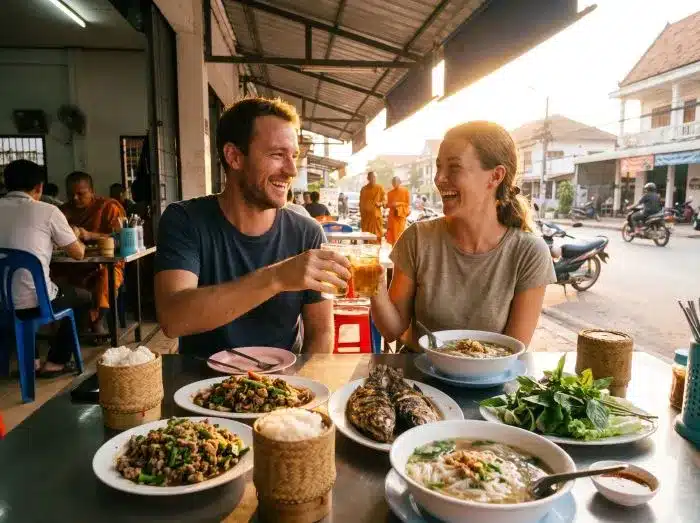
Expats earning in euros, pounds or US dollars may still find Laos affordable. Those earning local salaries face a different reality. Numbeo currently reports an average monthly net salary in Vientiane of around LAK 6 million (230 €), while a central one-bedroom apartment averages more than twice that amount.
The wider economy also matters. After several difficult years of inflation and currency depreciation, conditions improved during 2025. However, inflation rose again to close to 10% in April 2026 following higher fuel prices.
Expats should therefore leave some flexibility in their budgets rather than assuming today’s prices will remain stable.
Getting around in Laos
Getting around Vientiane is relatively straightforward, although public transport remains less developed than in many larger Asian capitals.
Taxis, ride-hailing services and tuk-tuks are commonly used. Motorbikes are also extremely popular, but road safety should be taken seriously. Traffic can be unpredictable and road conditions deteriorate considerably outside major urban areas.
One of the biggest changes to travel in Laos has been the railway linking Vientiane with northern Laos and China. It has made Vang Vieng and Luang Prabang much easier to reach and transformed what were once long road journeys.
Long-distance buses and minivans continue to serve towns that are not on the railway network.
Domestic flights can also be useful, particularly when travelling between Vientiane and more distant parts of the country.
Expats planning to drive should check the current requirements for using or converting their driving licence and make sure they have adequate vehicle and medical insurance.
Family life and education in Laos
Laos can offer families a relaxed lifestyle, particularly if they enjoy outdoor activities and are comfortable living somewhere less developed than neighbouring Thailand.
The main limitation is schooling.
International education is concentrated overwhelmingly in Vientiane. One of the best-known options is Vientiane International School (VIS), which offers international education from early years through secondary school and follows an August-to-June academic year.
Other international and bilingual schools operate in the capital, giving families considerably more choice than elsewhere in Laos.
Fees need to be included carefully in a relocation budget. Crowdsourced Vientiane data currently puts average annual international primary-school tuition at around LAK 219 million (8500 €), although actual fees vary substantially between schools and year groups.
Outside Vientiane, international schooling options become much more limited. Families considering Luang Prabang, Pakse or another regional location should therefore investigate education before signing a long-term lease.
Working in Laos
The Lao economy offers a narrower employment market than neighbouring Thailand or Vietnam.
Common sectors for foreign professionals include:
- International development and NGOs
- Education
- Tourism and hospitality
- Engineering
- Mining and energy
- Infrastructure
- Consulting
- International organisations
- Foreign investment projects
- Professional services
Tourism, transport, energy, mining and manufacturing have all contributed to recent economic activity. The World Bank reported growth of 4.8% in 2025, although growth is projected to moderate to around 3.8% in 2026.
Local salaries are generally low compared with Western standards. Expats arriving with an international employment package or foreign-source income are therefore in a very different financial position from people entering the domestic labour market.
Anyone planning to work locally should make sure their employer can legally sponsor the necessary visa and employment documentation before relocating.
Taxation for expats
Tax deserves particular attention for anyone planning to spend significant time in Laos.
Foreign individuals earning employment income in Laos are subject to Lao personal income tax. Foreigners who spend more than 183 days in Laos during a one-year period and receive remuneration from abroad can also become liable for Lao personal income tax on that remuneration.
Laos changed its personal income tax system in 2026. Under rules effective from 3 July 2026, monthly employment income is taxed progressively:
- Up to LAK 2.5 million (970 €): 0%
- LAK 2.5–5 million (970 – 1950 €): 5%
- LAK 5–15 million (1950 – 5840 €): 10%
- LAK 15–25 million (5840 – 9730 €): 15%
- LAK 25–65 million (9730 – 25.300 €): 20%
- Above LAK 65 million (25.300 €): 25%
Employees are also now required to obtain a Tax Identification Number and file an annual personal income tax return, generally by 31 March of the following year.
Expats with overseas investments, businesses, rental income or employment should seek professional advice, particularly where another country may also consider them tax resident.
Healthcare in Laos
Healthcare is one of the areas where expats need to plan particularly carefully.
Laos has public and private healthcare facilities, and private healthcare in Vientiane has improved. The capital now has international facilities including Alliance International Medical Centre and Kasemrad International Hospital Vientiane. The latter offers services including emergency medicine, orthopaedics, cardiology, neurology, surgery, paediatrics and obstetrics and gynaecology. English-speaking staff are available at both facilities.
However, the gap between Vientiane and the rest of the country remains significant.
The UK Foreign, Commonwealth & Development Office describes medical care in Laos as basic and warns that outside the capital there are no reliable facilities for serious medical emergencies. Patients may also be required to pay for treatment in advance.
For complicated surgery, major trauma or other serious conditions, medical evacuation to Thailand may be necessary. Organising an evacuation independently can be extremely expensive.
This makes international health insurance particularly important for expats living in Laos. A strong international policy such as offered by Global Health can provide access to private healthcare while also covering treatment abroad and medical evacuation, depending on the policy selected.
This is especially relevant for families, retirees and people living outside Vientiane. The important question is not simply whether your insurance pays for a doctor’s appointment in Laos. It is whether it can arrange and cover appropriate treatment elsewhere if the care you need is not available locally.
Discover today our plans in just a few clicks
Is Laos right for you?
Living in Laos can be a rewarding choice for expats who value a slower lifestyle, warm climate, natural beauty and the experience of living somewhere that still feels distinctly different from the major expat centres of Southeast Asia.
It works particularly well for international professionals, NGO employees, teachers, remote workers and people arriving with foreign income. Vientiane offers the easiest introduction, with the country’s best selection of international schools, private healthcare and modern accommodation. Luang Prabang, Pakse and smaller destinations offer a quieter experience but require considerably more flexibility.
Laos is less suitable for anyone who expects Western-style infrastructure everywhere or wants immediate access to sophisticated specialist healthcare. Families also need to think carefully before moving outside Vientiane because international schooling is limited.
Preparation makes the difference. Arrange the correct visa and work permissions, budget for international-standard housing and education, understand your tax position and make sure your health insurance includes appropriate private treatment and medical evacuation. With those practical issues covered, Laos can offer a fascinating and surprisingly comfortable base in Southeast Asia.
Other guides for Laos
-

 Georgia
-
 Paraguay
-
 Seychelles